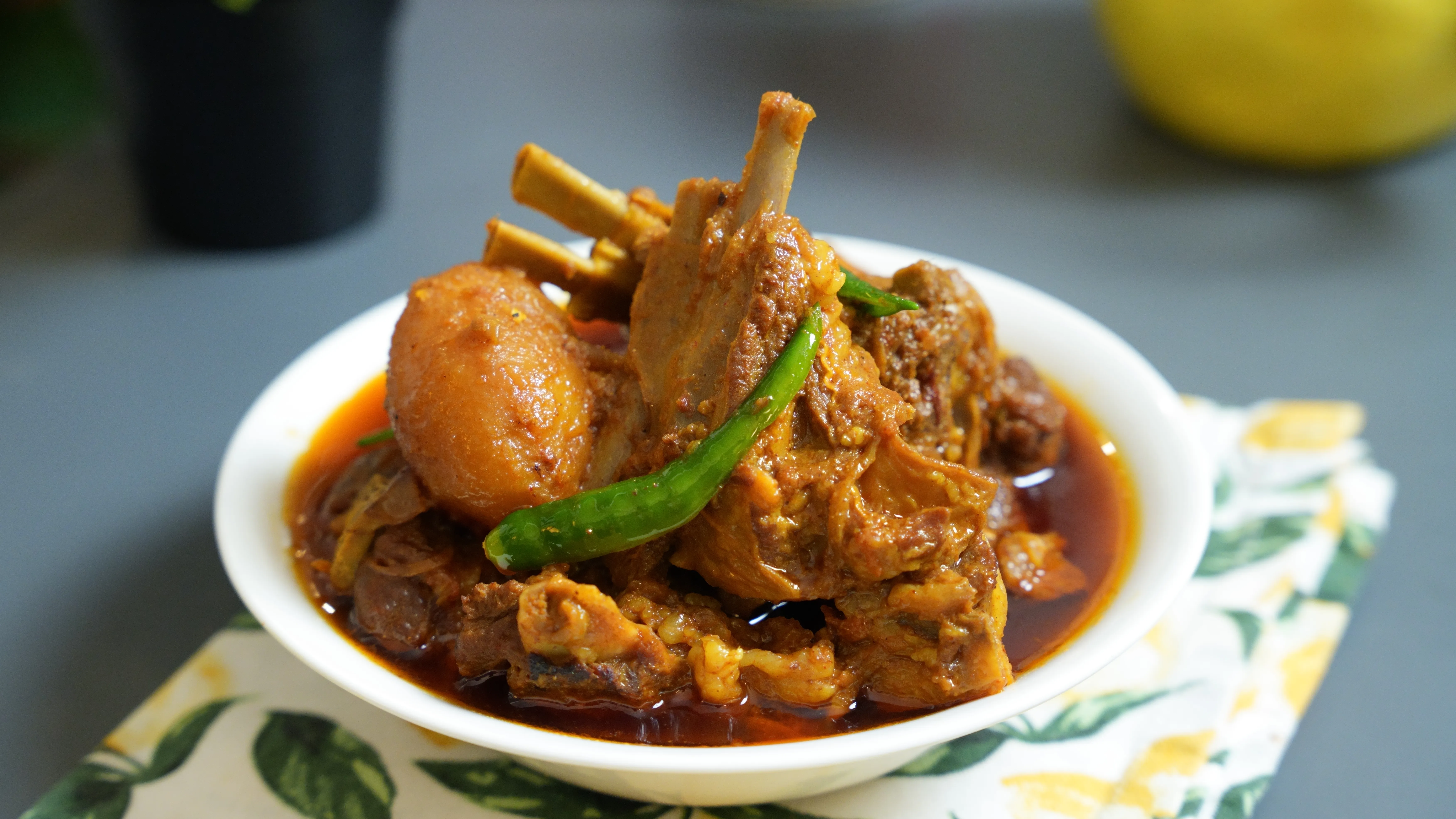
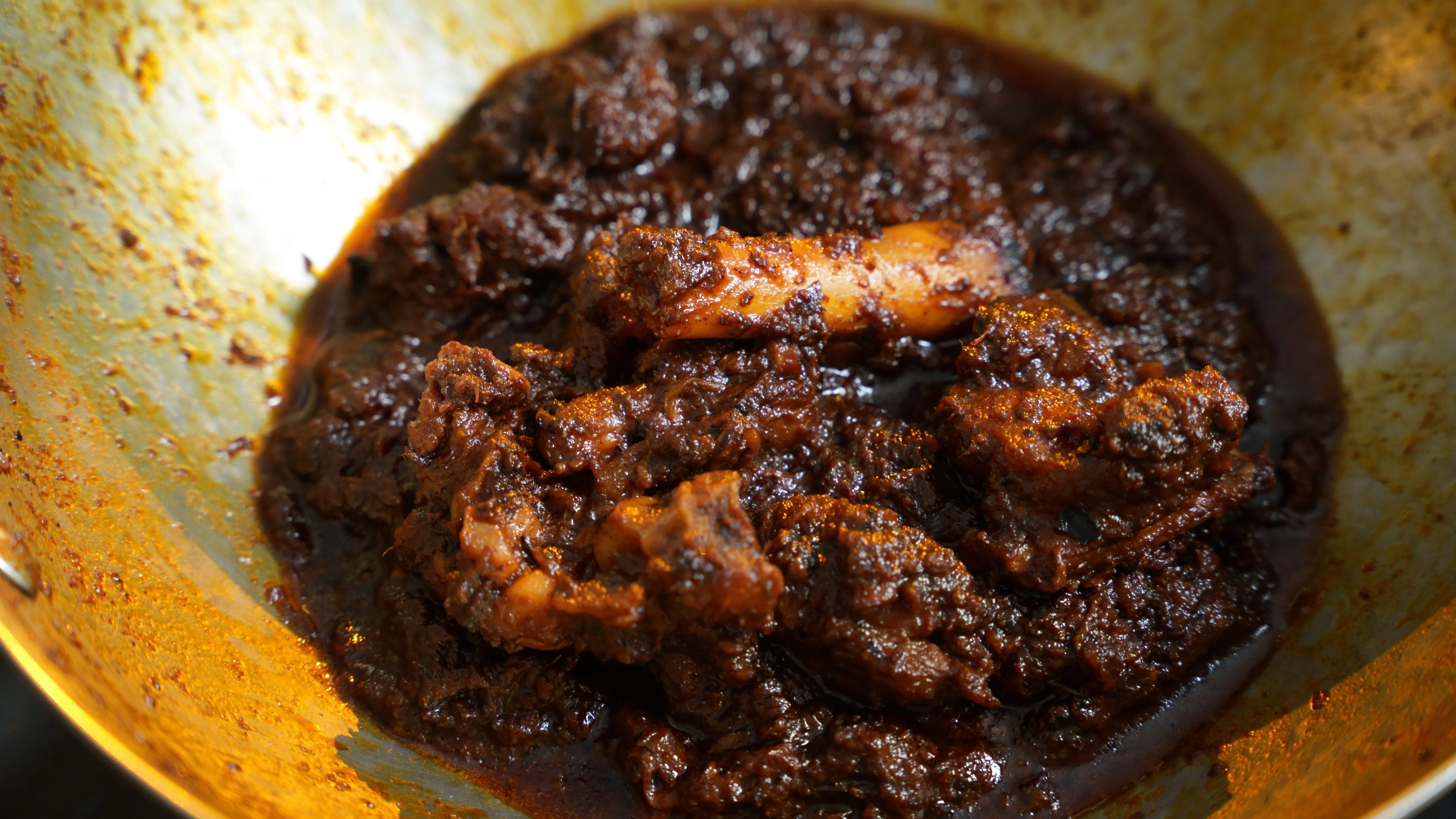
Shiv Shakti Arts Brass Lagan Handi with Lid
Traditional brass handi that provides gentle, even heating and is ideal for festive cooking and slow-cooked recipes.
🛒 View on Amazon
Recipe
Kolkata-style Mutton Biryani with fragrant basmati rice, tender mutton, potatoes, birista, saffron, yakhni and rogan, finished on dum.
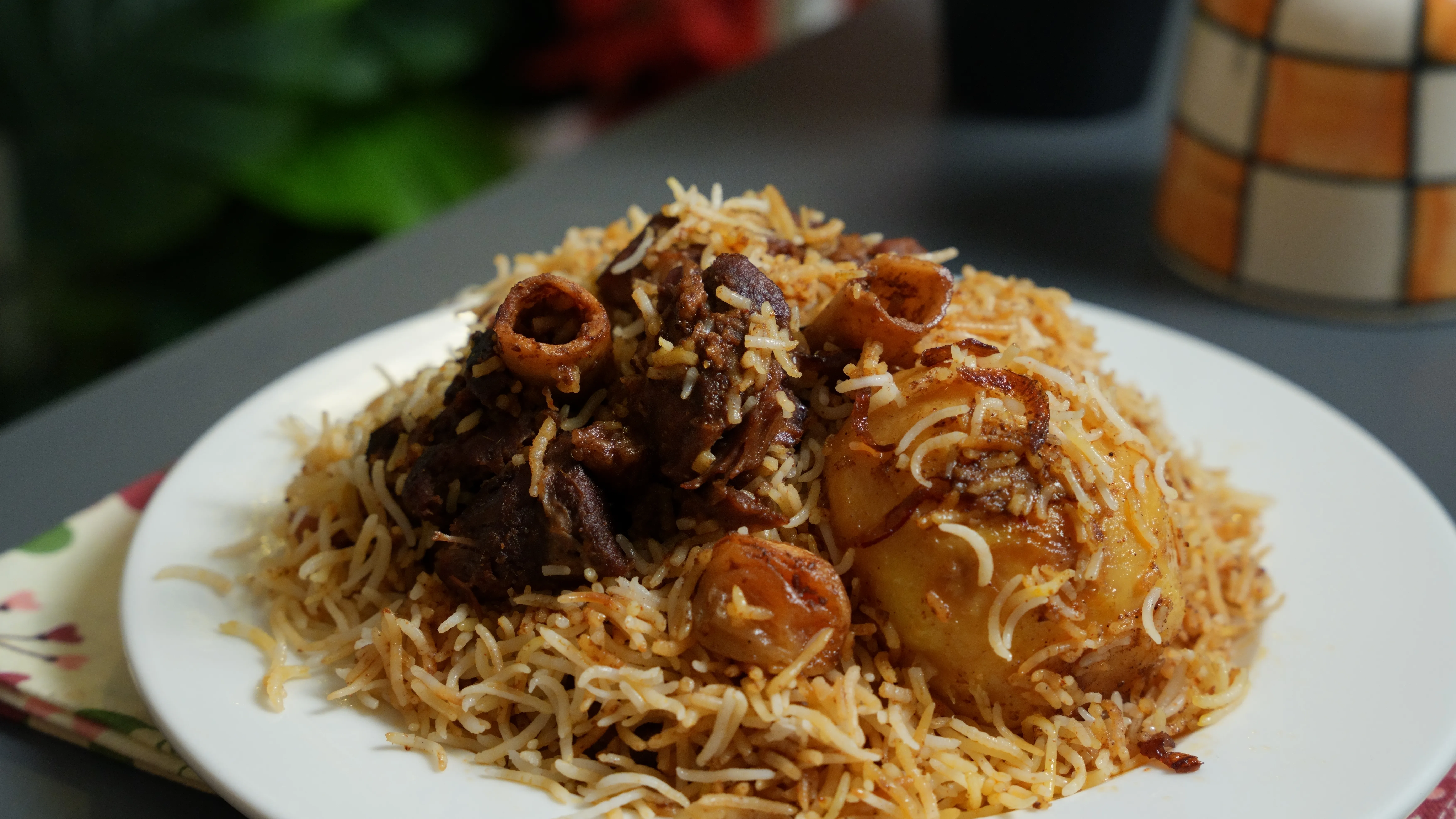
Kolkata Mutton Biryani is known for its restrained spice profile, long-grained rice, large tender pieces of mutton and the iconic potato. This version keeps the traditional multi-stage character of the dish while organising the process so that one person can manage it efficiently. The mutton is marinated and bhunaoed separately, the potatoes are cooked on their own, and the cooked mutton liquor is divided into concentrated tar and natural rogan. A strained yakhni, saffron essence milk and rogan-ghee are then used for different purposes during layering before the biryani is sealed and finished on dum.
Traditional brass handi that provides gentle, even heating and is ideal for festive cooking and slow-cooked recipes.
🛒 View on Amazon
Premium triply handi with even heat distribution, ideal for dum cooking, biryanis, pulao, curries, and one-pot meals.
🛒 View on Amazon
Stainless steel mixing bowl set in multiple sizes for mixing, marinating, whisking, storing, and serving ingredients.
🛒 View on AmazonOn very low heat, roast cinnamon, cloves, black cardamom, black pepper and kabab chini for about 2 minutes
Add shah jeera and white pepper and roast for another 30–40 seconds
Switch off the heat
Add green cardamom, mace, nutmeg and dried rose petals in the residual heat for 20–30 seconds
Cool completely, grind finely and sieve
Mix the mutton with thick curd, ginger paste, garlic paste, Kashmiri chilli powder, black pepper, CK Biryani Masala and salt
Marinate for at least 2–3 hours, preferably overnight in the refrigerator
Heat the neutral oil in a large pressure cooker
Fry the thinly sliced onions over medium heat until golden, removing them just before they reach their final colour
Cool until crisp and lightly crush
Reserve 75% for the mutton and 25% for layering
Keep the frying oil
Season the potatoes with salt and optional food colour
Use about 60 ml of the birista oil and fry the potatoes for 6–7 minutes until lightly golden
Add 300 ml hot water, cover normally and cook over medium-low heat for 15–20 minutes
Cook until the potatoes are about 90–95% done but still hold their shape
Uncover and evaporate all remaining water
Remove the potatoes and keep them aside
Do not wash the cooker after cooking the potatoes
Add 40 g ghee to the remaining birista oil
Add bay leaf, green cardamom, black cardamom, cinnamon, cloves, black pepper and kabab chini and let them become fragrant
Add the sliced onions and fry until golden
Add the marinated mutton and cook first over medium-high heat, then medium heat
Bhunao for about 25–30 minutes until the curd and ginger-garlic are cooked, the moisture reduces, the meat lightly browns and the fat begins to separate
Add 75% of the birista and 2 g CK Biryani Masala
Bhunao for another 5 minutes
Add 250 ml hot water
Pressure cook for about 15–18 minutes under pressure and allow natural pressure release
The mutton should be fully tender but still intact before dum
Remove the cooked mutton pieces from the cooker
Strain the cooking liquid and allow it to settle
Reserve 250 ml concentrated tar; reduce briefly if there is too much liquid
Skim off the natural mutton rogan and keep it separately
Combine 250 ml tar, milk, CK Biryani Masala, salt and sugar
Warm gently for 2–3 minutes without boiling aggressively
Add lemon juice and switch off the heat
Pass the yakhni through a fine strainer
Reserve all of it for the bottom mutton-and-potato layer only
Warm the natural mutton rogan and mix with 45 g ghee
Reserve 20% for the bottom layer, 30% for the first rice layer and 50% for the top layer
Bloom the saffron in warm milk for 15–20 minutes
Once the milk has cooled slightly, add kewra water, rose water and meetha attar
Do not reheat
Reserve 40% for the first rice layer and 60% for the top layer
Wash the basmati gently and soak for 60–90 minutes
Bring 6 L water to a strong boil with salt, green cardamom, black cardamom, cinnamon, cloves, bay leaf, shah jeera and kewra water
Boil the aromatic water for 3–4 minutes
Add the drained soaked rice and lemon or lime juice
Cook until the rice is about 75–80% done: elongated and soft outside with a tiny firm core
Drain immediately and do not rinse
Layer while the rice is still hot
Place all the mutton, potatoes and alu bukhara at the bottom of the handi
Pour over all the strained yakhni
Add about one-third of the khoya, about one-quarter of the reserved birista, a small amount of CK Biryani Masala and 20% of the rogan-ghee
Add half the rice as the first rice layer
Distribute 40% of the saffron essence milk, another one-third of the khoya, half of the remaining birista, a little CK Biryani Masala and 30% of the rogan-ghee
Add the remaining rice as the top layer
Distribute the remaining 60% saffron essence milk, remaining khoya, remaining birista, remaining CK Biryani Masala and the final 50% rogan-ghee
Do not stir and do not try to make the rice uniformly yellow
Seal the handi tightly with atta dough
Place over direct medium-high heat for 7–8 minutes to establish steam
Move the handi to a preheated heavy iron tawa and cook over low to medium-low heat for 25–30 minutes
Switch off the heat and rest the biryani sealed for 15–20 minutes
Open the handi and serve vertically from the bottom so each portion gets rice, mutton, potato and the flavoured lower layer
খুব কম আঁচে দারচিনি, লবঙ্গ, বড় এলাচ, কালো গোলমরিচ ও কাবাব চিনি প্রায় ২ মিনিট roast করুন
শাহি জিরে ও সাদা গোলমরিচ দিয়ে আরও ৩০–৪০ সেকেন্ড roast করুন
আঁচ বন্ধ করুন
Residual heat-এ ছোট এলাচ, জয়ত্রী, জায়ফল ও শুকনো গোলাপের পাপড়ি দিয়ে ২০–৩০ সেকেন্ড নাড়ুন
পুরো ঠান্ডা করে মিহি গুঁড়ো করুন এবং ছেঁকে নিন
মাটনের সঙ্গে ঘন দই, আদা বাটা, রসুন বাটা, কাশ্মীরি লঙ্কা গুঁড়ো, গোলমরিচ, CK বিরিয়ানি মশলা ও নুন ভালোভাবে মেশান
কমপক্ষে ২–৩ ঘণ্টা, ভালো হলে সারারাত refrigerator-এ ম্যারিনেট করুন
বড় pressure cooker-এ সাদা তেল গরম করুন
পাতলা কাটা পেঁয়াজ medium heat-এ golden হওয়া পর্যন্ত ভাজুন এবং final colour হওয়ার একটু আগেই তুলে নিন
ঠান্ডা করে crisp হতে দিন এবং হালকা করে ভেঙে নিন
৭৫% মাটনের জন্য এবং ২৫% layering-এর জন্য আলাদা করে রাখুন
ভাজার তেল রেখে দিন
আলুতে নুন এবং চাইলে সামান্য food colour মাখান
প্রায় ৬০ মিলি বিরিস্তার তেলে ৬–৭ মিনিট ভেজে হালকা golden করুন
৩০০ মিলি গরম জল দিন, সাধারণভাবে ঢেকে medium-low heat-এ ১৫–২০ মিনিট রান্না করুন
আলু ৯০–৯৫% সিদ্ধ হবে কিন্তু shape ধরে রাখবে
ঢাকনা খুলে সমস্ত জল সম্পূর্ণ evaporate করুন
আলু তুলে আলাদা রাখুন
আলু রান্নার পরে cooker ধুবেন না
বিরিস্তার বাকি তেলের মধ্যে ৪০ গ্রাম ঘি দিন
তেজপাতা, ছোট এলাচ, বড় এলাচ, দারচিনি, লবঙ্গ, কালো গোলমরিচ ও কাবাব চিনি দিয়ে সুগন্ধ বের হতে দিন
১৫০ গ্রাম কাটা পেঁয়াজ দিয়ে golden হওয়া পর্যন্ত ভাজুন
ম্যারিনেট করা মাটন দিন; শুরুতে medium-high এবং পরে medium heat-এ রান্না করুন
প্রায় ২৫–৩০ মিনিট কষান, যতক্ষণ না দই ও আদা-রসুনের কাঁচা ভাব চলে যায়, জল কমে আসে, meat হালকা brown হয় এবং fat আলাদা হতে শুরু করে
৭৫% বিরিস্তা এবং ২ গ্রাম CK বিরিয়ানি মশলা দিন
আরও ৫ মিনিট কষান
২৫০ মিলি গরম জল দিন
Pressure তৈরি হওয়ার পরে প্রায় ১৫–১৮ মিনিট pressure cook করুন এবং pressure naturally release হতে দিন
Dum দেওয়ার আগেই mutton সম্পূর্ণ tender কিন্তু intact হওয়া উচিত
রান্না করা mutton-এর টুকরোগুলো তুলে নিন
Cooker-এর liquid ছেঁকে কিছুক্ষণ settle হতে দিন
২৫০ মিলি concentrated tar রেখে দিন; বেশি হলে অল্প reduce করুন
উপরে ওঠা natural mutton rogan আলাদা করে নিন
২৫০ মিলি tar, milk, CK বিরিয়ানি মশলা, নুন ও চিনি একসঙ্গে মেশান
Low heat-এ ২–৩ মিনিট gently warm করুন; জোরে ফুটাবেন না
লেবুর রস দিয়ে আঁচ বন্ধ করুন
Fine strainer দিয়ে yakhni ছেঁকে নিন
পুরো yakhni শুধু নিচের mutton ও potato layer-এর জন্য রাখুন
Natural mutton rogan হালকা গরম করে ৪৫ গ্রাম ঘির সঙ্গে মেশান
২০% bottom layer-এর জন্য, ৩০% first rice layer-এর জন্য এবং ৫০% top layer-এর জন্য রাখুন
Warm milk-এর মধ্যে saffron ১৫–২০ মিনিট bloom হতে দিন
Milk সামান্য ঠান্ডা হলে kewra water, rose water ও meetha attar দিন
আবার গরম করবেন না
৪০% first rice layer-এর জন্য এবং ৬০% top layer-এর জন্য রাখুন
Basmati rice আলতো করে ধুয়ে ৬০–৯০ মিনিট ভিজিয়ে রাখুন
৬ লিটার জলে নুন, ছোট এলাচ, বড় এলাচ, দারচিনি, লবঙ্গ, তেজপাতা, শাহি জিরে ও কেওড়া জল দিয়ে জোরে ফুটিয়ে নিন
Spiced water ৩–৪ মিনিট ফুটতে দিন
ভেজানো rice ঝরিয়ে দিয়ে lemon বা lime juice দিন
Rice ৭৫–৮০% cooked হওয়া পর্যন্ত রান্না করুন; grain লম্বা হবে, বাইরে নরম কিন্তু মাঝখানে সামান্য firmness থাকবে
সঙ্গে সঙ্গে ছেঁকে নিন; rinse করবেন না
Rice গরম থাকতেই layering শুরু করুন
Handi-র bottom-এ সমস্ত mutton, potato ও alu bukhara রাখুন
এর উপর পুরো strained yakhni ঢেলে দিন
প্রায় এক-তৃতীয়াংশ khoya, reserved birista-র প্রায় এক-চতুর্থাংশ, সামান্য CK বিরিয়ানি মশলা এবং ২০% rogan-ghee দিন
এর উপর rice-এর অর্ধেক দিয়ে first rice layer করুন
৪০% saffron essence milk, আরও এক-তৃতীয়াংশ khoya, বাকি birista-র অর্ধেক, সামান্য CK বিরিয়ানি মশলা এবং ৩০% rogan-ghee ছড়িয়ে দিন
বাকি rice দিয়ে top layer করুন
বাকি ৬০% saffron essence milk, বাকি khoya, birista, CK বিরিয়ানি মশলা এবং শেষ ৫০% rogan-ghee দিন
Layerগুলো নাড়বেন না এবং rice পুরো একরঙা হলুদ করার চেষ্টা করবেন না
আটার dough দিয়ে handi ভালোভাবে seal করুন
প্রথমে direct medium-high heat-এ ৭–৮ মিনিট রাখুন যাতে steam establish হয়
তারপর preheated heavy iron tawa-র উপর handi রেখে low থেকে medium-low heat-এ ২৫–৩০ মিনিট dum দিন
আঁচ বন্ধ করে sealed অবস্থায় আরও ১৫–২০ মিনিট rest করুন
Handi খুলে নিচ পর্যন্ত vertically serve করুন যাতে প্রতিটি portion-এ rice, mutton, potato ও flavourful bottom layer থাকে
Mutton has a deeper flavour, more fat and a longer cooking time than chicken, so the aromatic balance is adjusted rather than simply reusing the same formula.
The masala in the marinade builds a deeper base, while the smaller later addition refreshes aromatic notes that would otherwise mellow during long cooking.
Cooking them separately lets you control their doneness and keeps their flavour clean instead of coating them in mutton gravy.
Tar is the concentrated meat cooking liquid left after the mutton is cooked, while rogan is the natural rendered mutton fat that rises to the top.
Straining removes onion, spice and curd particles so the final yakhni is smooth and does not make the rice gritty.
It gives the mutton and potato layer concentrated flavour and moisture without soaking the upper rice layers.
No. Cook the rice only to about 75–80% so it can finish during dum without becoming mushy.
No. The mutton should already be tender before layering; dum is mainly for finishing the rice and integrating aroma, moisture and fat.
 Watch on YouTube