Stainless Steel Mixing Bowls Set
Stainless steel mixing bowl set in multiple sizes for mixing, marinating, whisking, storing, and serving ingredients.
🛒 View on Amazon
Recipe
Bengali Sunday mutton curry with potatoes and well-koshano masala, pressure-cooked until tender and finished with garam masala, green chilli and ghee.
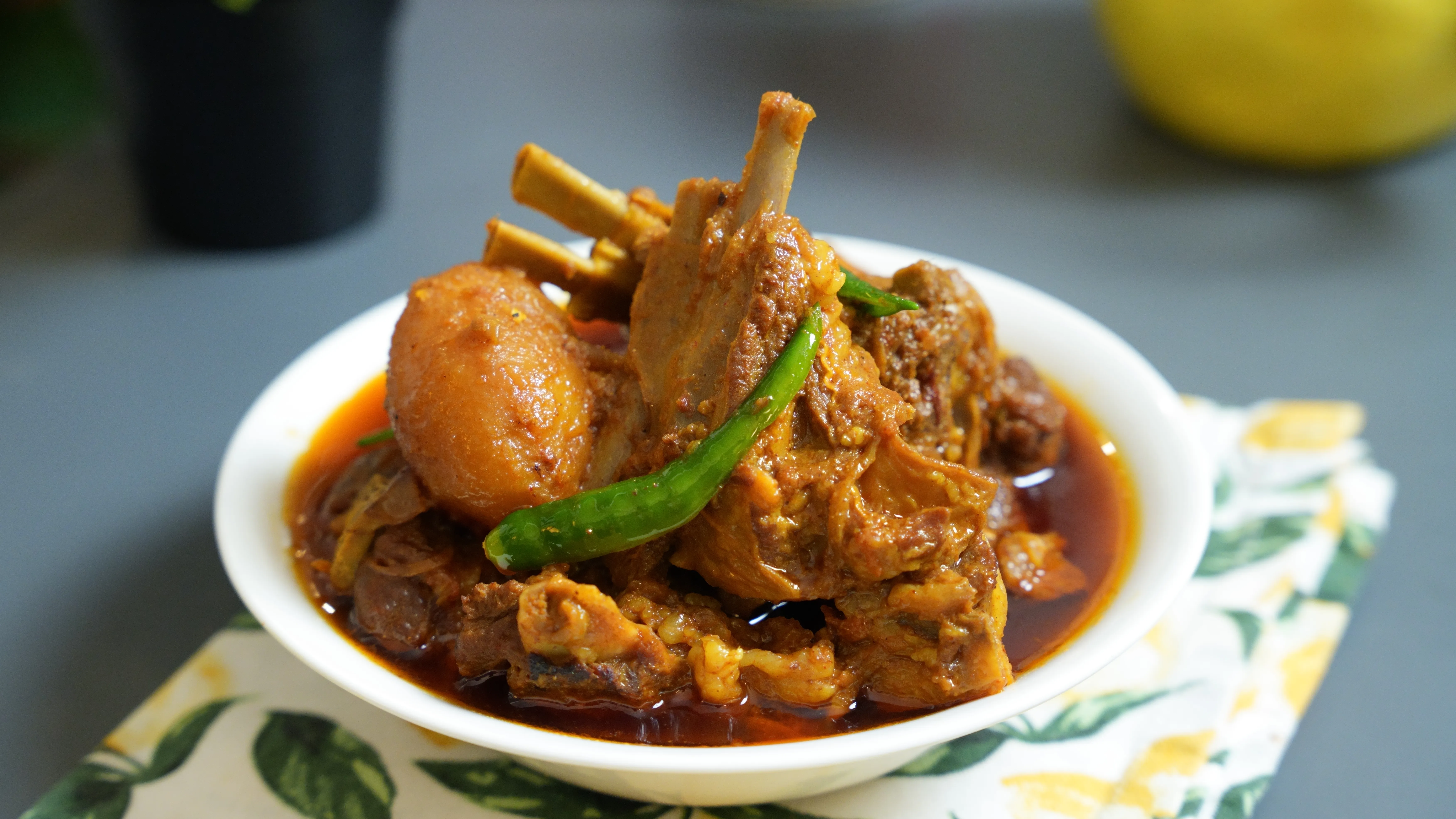
This Bengali Sunday mutton curry is built around the stages before the pressure cooker closes. The potatoes are fried first, sugar is lightly caramelised in mustard oil, onions are browned evenly, powdered spices go in as a wet slurry, and the mutton is koshano until the masala turns thick and clings to the meat with visible oil. Potatoes and green chillies return before approximately 350–400 ml hot water is added, then the curry pressure-cooks for tenderness. Because there is no reduction after pressure cooking, the gravy level must be judged before closing the lid. Bengali garam masala, fresh slit green chillies and ghee go in at the end, followed by a 10-minute covered rest off heat.
Stainless steel mixing bowl set in multiple sizes for mixing, marinating, whisking, storing, and serving ingredients.
🛒 View on Amazon
Premium Swiss chef knife with an exceptionally sharp blade, designed for precise slicing, chopping, and everyday food preparation.
🛒 View on Amazon
Premium stainless steel measuring cups and spoons with engraved measurement markings that won't fade over time.
🛒 View on Amazon
Stainless steel cooking spoon set with different spoon shapes for stirring, sautéing, serving, and everyday cooking tasks.
🛒 View on AmazonMix the mutton with salt, turmeric, ginger paste, garlic paste, curd and mustard oil until evenly coated
Marinate for at least 30 minutes; 1–2 hours is preferable
Season the large potato pieces with salt and turmeric
Heat the mustard oil in the pressure cooker or cooking pot
Fry the potatoes until they develop golden patches but are still firm
Remove and keep aside
In the same mustard oil, add the sugar and let it caramelise lightly
Add bay leaves, dried red chillies, green cardamom, cloves and cinnamon and let them become fragrant
Add the thinly sliced onions and cook until evenly browned
Keep the slices moving so they colour evenly rather than burning in patches
Add the tomato and cook until it softens
Mix turmeric, Kashmiri chilli powder, optional hot red chilli powder and coriander powder with a little water to make a wet slurry
Add the slurry and cook until the masala thickens
Add the marinated mutton and coat it thoroughly with the masala
Let the meat release its moisture, then continue cooking over controlled heat for about 20–25 minutes
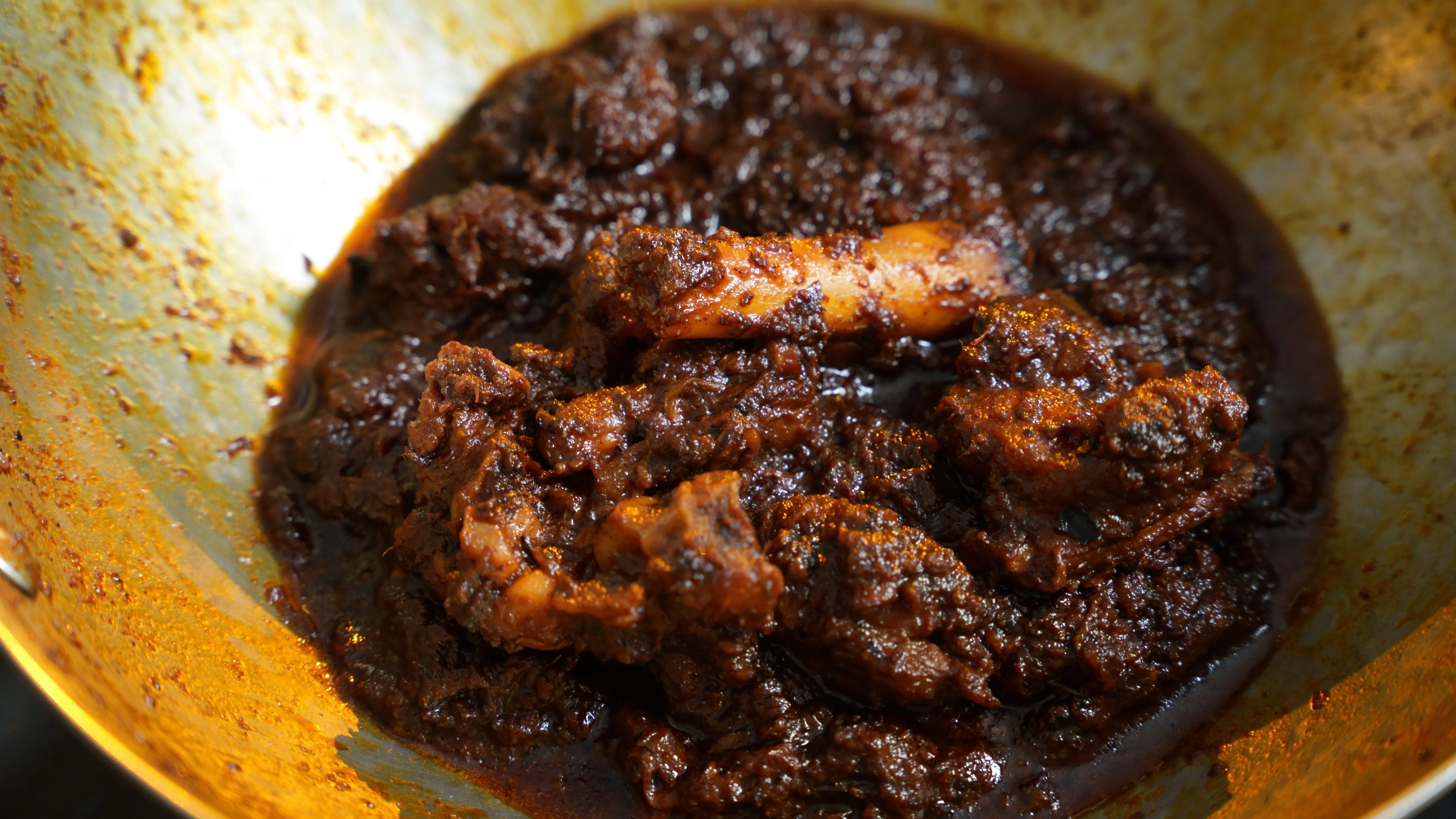
Keep koshano until the mixture moves from watery to reduced, then thick and clinging, the meat develops deeper colour and oil becomes visible
Return the fried potatoes to the cooker and add 4–5 green chillies
Add approximately 350–400 ml hot water
Judge the gravy level before closing the cooker because this method does not use a post-pressure reduction
Close the lid and bring the cooker up to pressure over high heat
Once pressure is established, cook over low-medium heat for about 18–22 minutes
Allow the pressure to release naturally before opening; cooking time can vary with the meat, cut and cooker
Add Bengali garam masala, 2–3 fresh slit green chillies and ghee
Mix gently, cover and rest off heat for about 10 minutes
Serve hot with white rice
মাটনের সঙ্গে নুন, হলুদ, আদা বাটা, রসুন বাটা, দই ও সর্ষের তেল ভালোভাবে মিশিয়ে নিন
কমপক্ষে ৩০ মিনিট marinate করুন; সময় থাকলে ১–২ ঘণ্টা ভালো
বড় আলুর টুকরোগুলোতে নুন ও হলুদ মাখিয়ে নিন
Pressure cooker বা cooking pot-এ সর্ষের তেল গরম করুন
আলুতে golden patch আসা পর্যন্ত ভাজুন, কিন্তু পুরো নরম করবেন না
তুলে আলাদা রাখুন
একই তেলে চিনি দিয়ে হালকা caramelise হতে দিন
তেজপাতা, শুকনো লঙ্কা, ছোট এলাচ, লবঙ্গ ও দারচিনি দিয়ে সুগন্ধ বের হতে দিন
পাতলা কাটা পেঁয়াজ দিয়ে সমানভাবে brown হওয়া পর্যন্ত রান্না করুন
নাড়তে থাকুন যাতে কিছু পেঁয়াজ পুড়ে যায় আর কিছু কাঁচা থাকে—এমন না হয়
টমেটো দিয়ে নরম হওয়া পর্যন্ত রান্না করুন
হলুদ, কাশ্মীরি লঙ্কা গুঁড়ো, optional ঝাল লাল লঙ্কা গুঁড়ো ও ধনে গুঁড়ো অল্প জলের সঙ্গে মিশিয়ে wet slurry তৈরি করুন
Slurry দিয়ে masala ঘন হওয়া পর্যন্ত রান্না করুন
ম্যারিনেট করা মাটন দিয়ে masala ভালোভাবে coat করুন
মাংস থেকে জল বেরোতে দিন, তারপর controlled heat-এ প্রায় ২০–২৫ মিনিট কষান
Watery অবস্থা থেকে reduced, তারপর thick ও clinging হওয়া, meat-এর colour গাঢ় হওয়া এবং oil visible হওয়া—এই cues দেখে কষানো judge করুন
ভাজা আলু আবার cooker-এ দিন এবং ৪–৫টি কাঁচালঙ্কা দিন
প্রায় ৩৫০–৪০০ মিলি গরম জল দিন
এই method-এ pressure cooking-এর পরে gravy reduce করা হচ্ছে না, তাই lid বন্ধ করার আগেই final gravy level judge করুন
Lid বন্ধ করে high heat-এ pressure উঠতে দিন
Pressure establish হলে low-medium heat-এ প্রায় ১৮–২২ মিনিট রান্না করুন
Pressure naturally release হতে দিন; meat, cut এবং cooker অনুযায়ী cooking time বদলাতে পারে
Bengali garam masala, ২–৩টি fresh slit কাঁচালঙ্কা এবং ঘি দিন
আলতো করে মিশিয়ে আঁচ বন্ধ অবস্থায় ঢেকে প্রায় ১০ মিনিট rest করুন
গরম সাদা ভাতের সঙ্গে serve করুন
The sugar is lightly caramelised to deepen colour and add a subtle caramelised note. It is not there to make the curry sweet and it does not replace proper onion browning.
Similar-thickness slices brown at a similar rate, reducing the chance of having burnt pieces mixed with undercooked ones.
Mixing the powdered spices with a little water lowers the chance of them scorching immediately on contact with the hot pan and helps them spread through the masala more evenly.
Look for the progression rather than only the clock: excess moisture reduces, the masala becomes thick and clings to the meat, the colour deepens and oil becomes visible.
No. This method uses about 18–22 minutes on low-medium heat after pressure is established, but the exact time varies with the meat, cut and cooker.
The earlier chillies cook into the curry, while the fresh slit chillies at the end preserve more of their fresh aroma.
There is no post-pressure reduction in this method, so the liquid level before the lid closes largely determines the final gravy quantity.
This recipe specifically allows the pressure to fall naturally before opening rather than forcing the cooker open.
The final seasonings are added off heat, then the curry is covered for about 10 minutes before serving.
Yes. The larger pieces in this version are deliberately chosen for presentation; home cooks can use smaller curry-cut pieces.
 Watch on YouTube