Stainless Steel Mixing Bowls Set
Stainless steel mixing bowl set in multiple sizes for mixing, marinating, whisking, storing, and serving ingredients.
🛒 View on Amazon
Recipe
Bengali sweet-shop style hing dal kochuri with a soft urad dal filling, roasted spices and a lightly puffed, crisp shell.
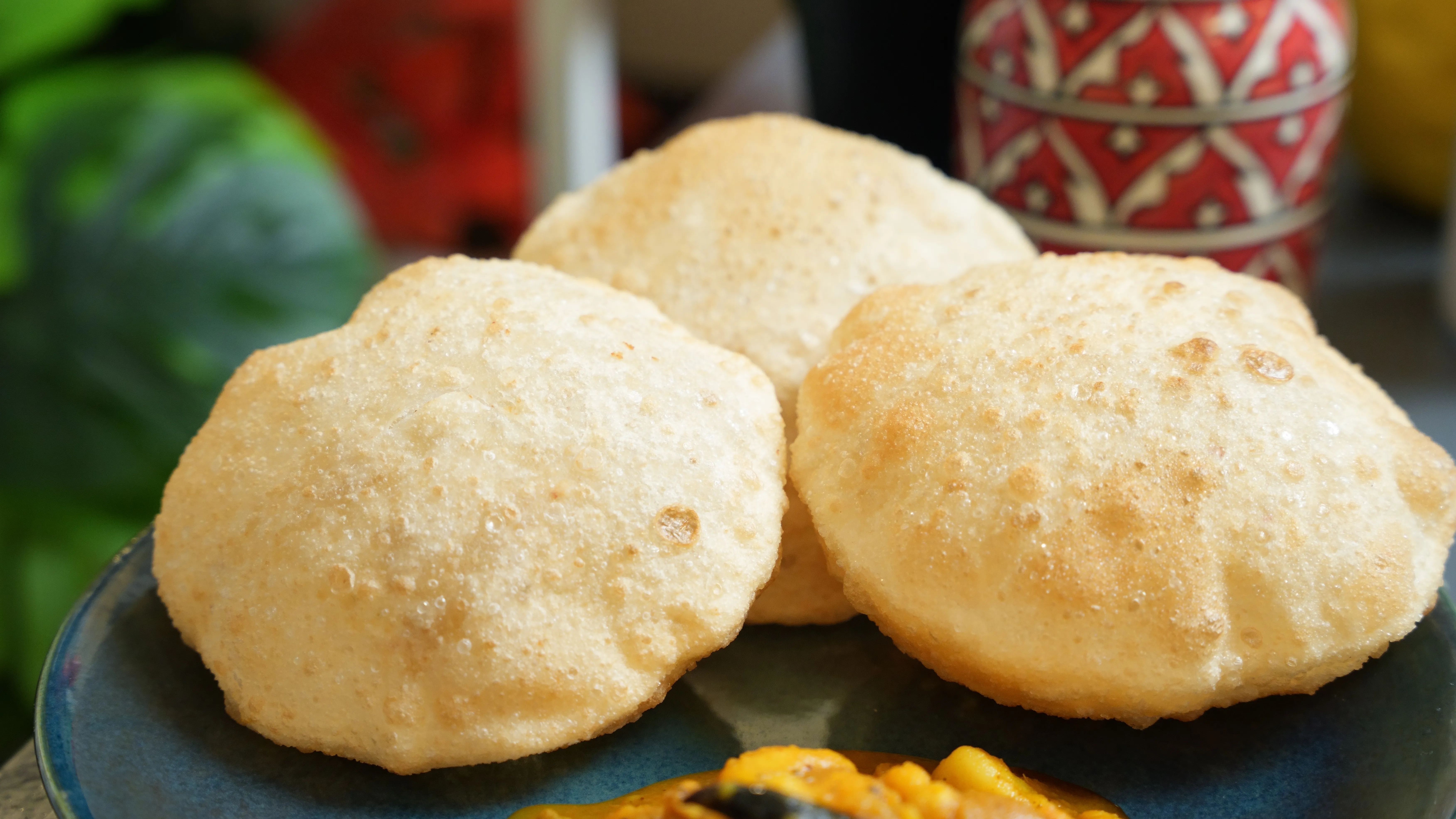
This Bengali sweet-shop style Hing Dal Kochuri is built around the filling rather than the puff. Urad dal gives the filling its body, hing supplies the distinctive aroma, and a roasted fennel-cumin-dry chilli masala adds the warm spice layer. The key is to use very little water while grinding the dal and then cook the filling only until it becomes soft and cohesive—not dry, sandy or brittle. The dough is rested, the kochuri is rolled to about 10–11 cm and fried around 180°C until lightly golden.
Stainless steel mixing bowl set in multiple sizes for mixing, marinating, whisking, storing, and serving ingredients.
🛒 View on Amazon
Premium Swiss chef knife with an exceptionally sharp blade, designed for precise slicing, chopping, and everyday food preparation.
🛒 View on Amazon
Heavy-gauge round-bottom iron kadai that distributes heat evenly, retains heat exceptionally well, and is perfect for frying, sautéing, and slow cooking.
🛒 View on Amazon
Stainless steel cooking spoon set with different spoon shapes for stirring, sautéing, serving, and everyday cooking tasks.
🛒 View on AmazonRub the oil into the maida until evenly combined
Add water gradually and make a smooth, medium-soft dough
Knead for about 5 minutes
Cover and rest for 30–40 minutes
Dry-roast fennel seeds, cumin seeds and dry red chilli on low heat until aromatic
Cool completely and grind fairly fine
Wash and soak the urad dal for 3–4 hours
Drain extremely well
Grind the dal with ginger and green chilli using as little water as possible
Keep the grind fine but not completely pasty
Heat oil over medium-low heat
Add hing and immediately add the ground dal
Cook while stirring, then add salt, sugar and the roasted masala
Cook until the raw smell disappears and the mixture gathers into a soft, cohesive mass
Do not dry the filling into a hard or crumbly mixture
Cool completely before stuffing
Divide the dough into portions of approximately 32–35 g each
Take approximately 12–14 g filling per kochuri
Stuff and seal each piece well
Rest the stuffed balls for 5–10 minutes
Roll each one to approximately 10–11 cm diameter
Do not roll paper-thin
Heat neutral oil to around 180°C
Gently press the kochuri when it enters the oil to encourage puffing
Fry until lightly golden
Do not over-fry
Drain and serve
ময়দার মধ্যে তেল ভালো করে rub করে মিশিয়ে নিন
ধীরে ধীরে জল দিয়ে smooth, medium-soft dough তৈরি করুন
প্রায় ৫ মিনিট knead করুন
ঢেকে ৩০–৪০ মিনিট rest দিন
মৌরি, জিরে ও শুকনো লঙ্কা low heat-এ aromatic হওয়া পর্যন্ত dry-roast করুন
পুরো ঠান্ডা করে fairly fine করে grind করুন
বিউলির ডাল ভালো করে ধুয়ে ৩–৪ ঘণ্টা soak করুন
একদম ভালো করে জল ঝরিয়ে নিন
যতটা সম্ভব কম জল দিয়ে আদা ও কাঁচালঙ্কার সঙ্গে ডাল grind করুন
Grind fine হবে, কিন্তু একেবারে pasty নয়
Medium-low heat-এ তেল গরম করুন
হিং দিয়ে সঙ্গে সঙ্গে ground dal দিন
নাড়তে নাড়তে রান্না করুন, তারপর নুন, চিনি ও roasted masala দিন
Raw smell চলে গিয়ে mixture soft, cohesive mass হয়ে এলে নামান
পুর শক্ত, শুকনো বা crumbly করবেন না
Stuffing-এর আগে পুরো ঠান্ডা করুন
প্রতি dough portion প্রায় ৩২–৩৫ গ্রাম করুন
প্রতি kochuri-তে প্রায় ১২–১৪ গ্রাম পুর দিন
ভালো করে stuff ও seal করুন
Stuffed balls ৫–১০ মিনিট rest দিন
প্রায় ১০–১১ সেমি diameter-এ roll করুন
Paper-thin করবেন না
Neutral oil প্রায় ১৮০°C পর্যন্ত গরম করুন
Kochuri তেলে দেওয়ার সময় আলতো করে press করুন যাতে puff করতে সাহায্য করে
হালকা golden হওয়া পর্যন্ত fry করুন
বেশি dark করবেন না
তেল ঝরিয়ে serve করুন
The urad dal forms the body and texture of the filling, while hing supplies the distinctive aroma associated with hing kochuri.
Extra water makes the ground filling wetter and increases the amount of cooking needed to reach a cohesive texture.
The goal is a fine but not completely pasty grind. Too much water makes the filling harder to cook down and changes its texture.
No. It should be cooked and cohesive, but still soft. A hard, crumbly or sandy filling is over-dried.
Hing is bloomed briefly in the hot oil so its aroma can spread through the filling before the dal is added.
Dry-roasting the fennel, cumin and dry chilli builds a warm aromatic spice layer that is added to the hing-led filling.
A hot filling can soften the dough and make shaping and sealing more difficult.
About 10–11 cm in diameter, but not paper-thin.
Around 180°C. Gently pressing the kochuri as it enters the oil can help encourage puffing.
Cooked and cohesive, with enough moisture to stay soft rather than becoming sandy or brittle.
 Watch on YouTube