
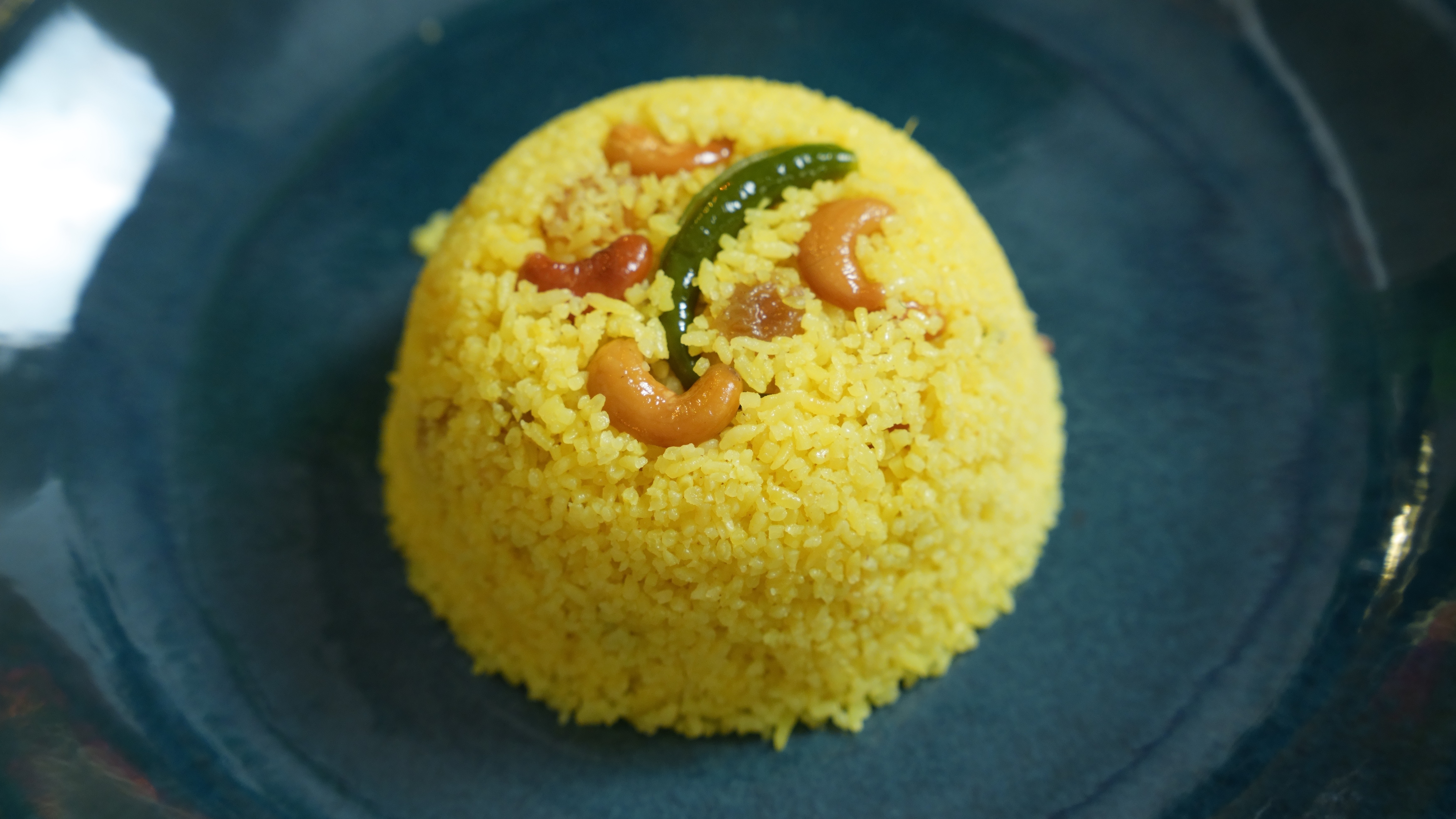
A Bengali Comfort Classic
Basanti Pulao is one of Bengal’s most celebrated festive rice dishes, traditionally served during weddings, pujas and special occasions. The secret to perfectly fluffy Basanti Pulao is not the water ratio but preparing the rice correctly, frying it patiently and adding sugar at the right stage of cooking.
- Prep Time: 20 mins
- Cook Time: 30 mins
- Serves: 4–5
Ingredients
Main Ingredients
- 500 g Gobindobhog rice
- 70–80 g ghee
- 2 tbsp oil (optional)
Whole Spices
- 2 bay leaves
- 2-inch cinnamon
- 5–6 green cardamoms
- 5–6 cloves
Other Ingredients
- 15–18 cashews
- 2 tbsp raisins
- 1 tsp ginger paste
- ¾ tsp turmeric powder
- Salt to taste
- 2½ tbsp sugar
- About 1 litre hot water
Method
Phase 1 — Preparation
- Wash the Gobindobhog rice gently and drain completely
- Mix the rice with ghee, turmeric powder and ginger paste
- Rest for 15–20 minutes
Phase 2 — Frying
- Heat the ghee and fry the cashews until lightly golden. Fry the raisins until they puff up. Remove and keep aside
- In the same ghee add the bay leaves, cinnamon, green cardamoms and cloves. Fry until fragrant
- Add the marinated rice and fry over medium heat until the grains become slightly translucent
Phase 3 — Cooking
- Pour in the hot water
- Add salt and bring to a boil
- Cover and cook over low heat
- When the rice is about 80% cooked, add the sugar and fold gently
- Return the fried cashews and raisins
- Cook until the rice is fully done
- Turn off the heat and let the pulao rest, covered, for 15 minutes
- Fluff gently before serving
Chef’s Tips
- Always drain the rice well before mixing with the ghee
- Fry the rice patiently until slightly translucent for separate grains
- Add sugar only when the rice is about 80% cooked
- Rest the pulao for 15 minutes before fluffing
Frequently Asked Questions
- Why isn’t my Basanti Pulao fluffy? The rice may not have been fried enough before adding water
- Why is sugar added later? Adding sugar near the end helps the rice stay separate
- Can I use Basmati rice? Gobindobhog gives the authentic flavour, but Basmati can be substituted
- Why should the pulao rest after cooking? Resting allows the steam to redistribute and keeps the grains separate

